


Total Property -
Ground before growth
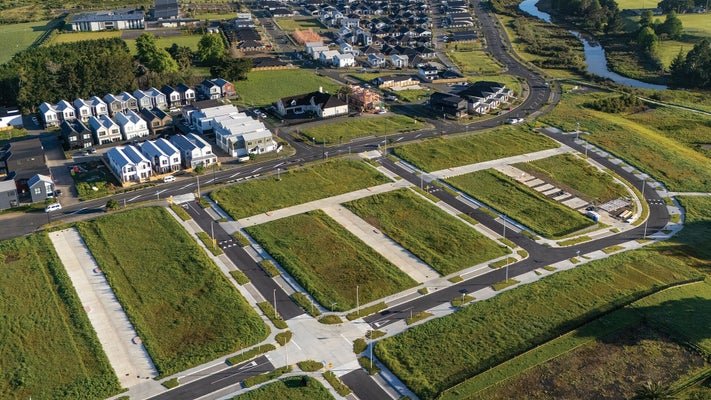
Activity is returning to New Zealand’s development land market – but not in the way cycles typically unfold. As capital moves early and selectively, infrastructure, not demand, is shaping where growth can actually occur.
There’s a quiet dislocation emerging across New Zealand’s development land market, says Bayleys development land sales director, Wesley Gerber.
On the surface, the indicators are familiar.
Residential sales volumes have normalised. Developer sentiment is improving. Building consents are beginning to lift. Yet prices – both for land and the end product – remain largely flat, held in place by a still-elevated pipeline of housing supply and a cautious capital environment.
In a conventional cycle, those signals would suggest a market waiting for confirmation. Instead, something more nuanced is taking place; developers are moving anyway.
Bayleys insights analyst, Samantha Lee, agrees that activity is improving, but pricing hasn’t followed yet.
“That’s popped open a window for well-capitalised, disciplined groups to position themselves ahead of the next market leg.”
It’s a pattern consistent with early-cycle behaviour, but with a critical distinction. This time, the constraint is not demand, nor funding in its traditional sense, but infrastructure.
Returning to motion, not momentum
Bayleys’ latest New Zealand development land market update paints a picture of a sector that has stabilised, rather than rebounded.
Residential sales volumes have returned broadly to ‘normal’ levels, but the weight of supply, particularly across key urban markets, continues to suppress price growth.
“There’s a clear wait-and-see dynamic at play,” Gerber says. “If pricing doesn’t reflect that reality, buyers simply aren’t engaging.”
Gerber describes a market where transaction activity is returning, but with specific conditions.
“Capital is there, but it’s disciplined,” he says. “Buyers are targeting opportunities where pricing reflects reality, and where they can see a clear pathway to delivery.”
That distinction is critical. The absence of price growth is not a sign of inactivity – it is a sign of recalibration. Developers are not withdrawing; they’re underwriting more conservatively, pricing risk more rigorously, and in many cases, rethinking where and what they build.
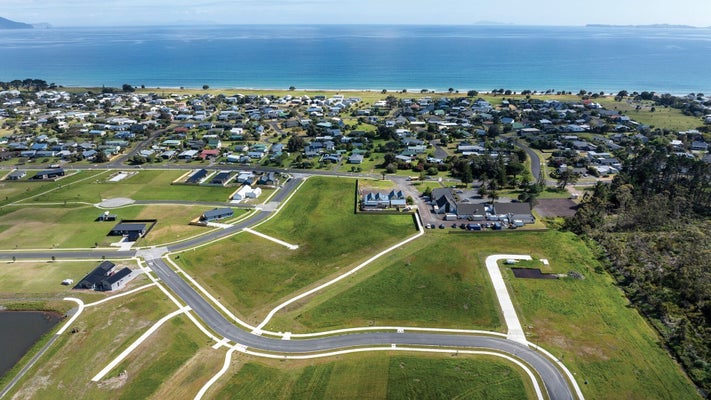
“Recent transactions across growth corridors, including Drury, Tauranga and Whenuapai, reflect this shift,” Gerber says. “With activity concentrated around sites where infrastructure, planning clarity and delivery timeframes are already aligned.”
Developers leading, not following
One of the more striking features of the current development landscape is the extent to which developers are acting ahead of traditional demand signals.
Historically, development cycles have been reactive – triggered by price growth, sales velocity or tightening supply. Today, the causality is reversing.
“Developers are positioning for where the market is going, not where it is today,” Lee says. “The increase in building consents over the past 12 months is an early signal of that. It shows confidence in the next phase of the cycle, even if current pricing hasn’t caught up yet.”
On the ground, that behaviour is tangible.
Gerber points to a growing cohort of buyers willing to transact in the current environment – provided the fundamentals align. “Deals are inked where there’s clarity – clarity on planning, infrastructure and delivery timeframes. Where those elements are uncertain, activity drops away quickly.”
Speculative capital, it seems, is quiet. Strategic capital is moving early – but only where risk can be clearly defined.
Product is shifting – and so is buyer psychology
At the same time, the market is experiencing a structural shift in product preference.
The Bayleys report identifies a clear move toward lower-density formats, with developers increasingly favouring standalone and duplex housing over large-scale terrace and apartment schemes.
That change is not simply cyclical – it’s behavioural.
“There has been a reset in what buyers value,” says Founders Group development manager Kent Weeks.
Founders is a specialist master-planned subdivision firm operating across key growth markets, including Auckland and the Golden Triangle.
“Kiwis are more design-conscious and more focused on quality outcomes. The market is rewarding well-considered products, not just density.”
Weeks notes that while density remains a necessary part of urban growth, the execution of that density – design, amenity and liveability – has become a key differentiator.
“There’s a legacy from the last cycle,” he says. “Some of the products that came out of that building boom have shaped perception. Developers now need to work harder to demonstrate quality, and that’s influencing the types of products being pursued.”
The Neil Group development manager Matt Ashworth represents one of New Zealand’s longest-standing and largest land development companies with projects spanning Auckland and key regional growth centres - sees a similar trend.
“There’s a degree of townhouse fatigue,” he says. “A lot of that stock from the previous boom is still being absorbed. Home buyers are looking for something different. More space, better design and a clearer sense of value.”
That preference is feeding directly into land acquisition strategies. Sites that support standalone or duplex outcomes – particularly in growth corridors – are attracting stronger interest than those geared toward higher-density formats.
Infrastructure: the constraint reshaping the map
If product preference explains what is being built, infrastructure explains where.
Across the sector, there is near-universal agreement that infrastructure constraints are the defining factor in development feasibility.
The Bayleys report is unequivocal: infrastructure has become a “major challenge” in delivering new supply, with developers increasingly sensitive to servicing capacity when accessing land opportunities.
Weeks puts it more bluntly.
“Infrastructure has always lagged demand,” he says. “What’s changed is how central it is to decision-making. It’s now one of the first filters, not the last.”
The implication is significant. Development is no longer simply a function of zoning or demand – it is a function of deliverability.
“Growth is being redirected where delivery is possible,” Gerber says. “That’s influencing everything from site selection to pricing and project timeframes.”
For developers, that often means shifting focus away from traditional core markets.
Ashworth points to a growing divergence between Auckland and regional centres.
“In Auckland, uncertainty around planning and infrastructure has made feasibility more challenging,” he says.
“We’ve had situations where direction changes mid-stream, and that has real cost implications.”
In contrast, regional markets are becoming increasingly attractive – not necessarily because of lower acquisition costs, but greater planning clarity.
“In places like Taupō, the process can be more streamlined,” Ashworth says. “You get answers more quickly. That certainty is valuable.”
Unlocking – or redistributing – supply
Against this backdrop, government policy is playing an increasingly central role.
The Fast-track process is designed to address one of the sector’s most persistent constraints: time.
Under the framework, projects of regional or national significance can be referred to an expert panel. To date, decisions have usually been delivered within six months, significantly compressing timelines that have historically stretched into years.
For the Minister of Housing and Infrastructure, Chris Bishop, the rationale is straightforward.
“Important projects were stuck for years in delays, buried in bureaucracy, with costs spiralling and communities missing out,” he says. “The Fast Track Approvals Act is about to make it easier and quicker to build the infrastructure and major projects we need to get New Zealand moving.”
Early indications suggest that the model is gaining traction, with many significant projects already approved and underway.
More broadly, reforms to the Resource Management Act (RMA), overseen by Chris Bishop in his role as Minister Responsible for RMA Reform, are intended to address the fundamental constraints on land supply.
“The current RMA has acted as a handbrake on growth and opportunity, and restrictions on the supply of developable urban land are at the heart of our housing affordability challenges.
“Our new system will enable competitive urban land markets by making land available to meet current and expected demand for business and residential development. It will deliver fewer surprises, fewer disputes, and faster decision,” he says.
Critically, those reforms are also tied to infrastructure planning.
“We are aligning infrastructure investment with growth,” Bishop says, pointing to long-term planning pipelines and funding tools designed to ensure that development is supported by the necessary services.
“The existing RMA creates significant uncertainty, and the new system will give developers more certainty about what can be built and where. A simpler and faster consenting pathway should give developers greater confidence,” he says.
The reality on the ground
For developers, the policy direction is broadly welcomed – but the practical impact remains uneven.
“There’s no question the intent is positive,” Weeks says. “What the sector needs is certainty – clear, consistent direction over the long term. That’s what allows capital to be deployed with confidence.”
Ashworth agrees, noting that inconsistency at a local level can undermine national policy objectives.
“The biggest challenge is not just regulation, it’s the variability of it,” he says. “When direction changes, or when there’s a lack of alignment between central and local government, it creates risk. And risk ultimately affects feasibility.”
That tension, between policy ambition and delivery risk, remains one of the defining features of the current market landscape.
A different cycle
Lee says these dynamics point to a development cycle that is materially different from those that have come before.
There is no broad-based surge in pricing. No speculative rush. No uniform recovery across market segments. Instead, there is selectivity.
Capital is being committed, but only where the fundamentals align. Developers are moving, but only where they can see a clear path to delivery. Demand is returning, but in more defined, discerning ways.
“Everything is more considered,” Gerber says. “That’s the defining feature of this cycle.”
In that sense, plateaued pricing is not a weakness; it’s a foundation.
“This consistency allows projects to be underwritten more sustainably. It encourages discipline in both acquisition and delivery. And it creates a window for those able to act ahead of the curve.”
Growth will follow infrastructure
“If there is a single takeaway from the current dynamics, it is that growth will not occur evenly. It will occur when it can,” Gerber says.
“Over the next 12 months, we expect activity to continue building ahead of pricing. The recovery is underway, but it will remain selective and infrastructure led.”
Infrastructure capacity, rather than zoning, sentiment or even demand, will increasingly determine which locations move first, and which remain constrained.
For investors and developers, that has clear implications.
Gerber says site selection will matter even more. Due diligence extends beyond planning into servicing and delivery timeframes, and geographic diversification, across regions, and growth corridors, will become increasingly critical.
“The market is telling us something. It isn’t about demand returning, but how and where that demand can be met.”
In the near term, that may mean a continued disconnect between activity and pricing. But over time, as infrastructure aligns with growth and policy reforms take effect, that gap is likely to close.
“Developers have been burned waiting for certainty. In this next leg of the cycle, we see growth will follow those with the capacity to deliver,” Gerber says.
Contact us


