


Total Property -
Fuel for thought

There’s no shortage of market distractions, but investors who stay focused on the fundamentals will be well-placed to optimise opportunity.
Just as early signs of economic momentum were beginning to emerge, and we were quietly hoping for a better year in 2026, global events have conspired to put a spanner in the works. Economists and other commentators speculate that while a short term conflict would be disruptive yet ultimately manageable, a prolonged one would create meaningful friction across markets, businesses and communities alike.
Recent headlines make for challenging reading, but rather than speculate on what comes next, we’re focused on what we can see – and what we know.
Bayleys clocked its strongest financial year end results on record as at 31st March, a clear signal that commercial and industrial property fundamentals remain sound. Activity lifted across the board, with listings up, transaction numbers rising and values boosted by multiple $20 million plus deals.
Market sentiment in the hotels, tourism and leisure sector is increasingly positive, underpinned by international visitor numbers rebounding to around 97 percent of pre pandemic levels. Enquiry has accelerated since mid January, with a corresponding lift in concluded deals as capable buyers re engage and transact decisively. There’s also an encouraging pipeline of new assets coming onstream, demonstrating confidence from developers.
Office leasing enquiries have lifted notably across Auckland and Christchurch, albeit with an increasingly pronounced divide between prime and secondary asset demand, while in the retail sphere, regional, neighbourhood and supermarket assets continue to be attractive to investors, with institutional buyers circling for opportunities.
Once dubbed alternative asset classes, the living sectors are garnering increased attention. “Beds, eds, and meds” is the catchphrase to cover the commercial accommodation, healthcare, retirement, build-to-rent and purpose-built student accommodation (PBSA) markets and global capital is hungry for associated real estate.
Bayleys’ Property Collection, a new addition to our distinctive suite of investment portfolios, is successfully connecting rural capital with commercial opportunities. The publication has gained strong traction at regional Fieldays events and among rural clients nationwide. Portfolio offerings will resonate with shareholder farmers set to benefit from the capital return flowing from the Fonterra–Lactalis deal, with investment‑grade commercial assets proving an attractive diversification option, allowing equity to be redeployed into high‑quality assets beyond the farm gate.
At the time of printing, New Zealand’s 90-day Bank Bill Benchmark Rate (BKBM) was around 2.53 percent, an exceptionally low setting that keeps the cost of debt attractive when measured against commercial property returns so there are many positives to be found in the market today.
Internationally, eyes are turning our way, too. The Asia Pacific region continues to draw significant global capital, with New Zealand well-positioned to capture deal flow off the back of investment momentum being seen in Australia. Offshore capital from the US, UK, Germany and Asia remains active, as geopolitical uncertainty accelerates the reallocation of funds toward stable, high quality property markets.
The Active Investor Plus (AIP) visa has brought circa-$3.39 billion into New Zealand to date, notably attracting high-value global investors in the Balanced category where certain commercial real estate investments are eligible.
Even as geopolitical tensions make themselves felt at the fuel pump, the commercial real estate sector continues to show resilience, with clear opportunities for those willing to move decisively.
History shows that times of turmoil can be game-changing in the property market so connect with us to ensure that opportunity doesn’t pass you by.
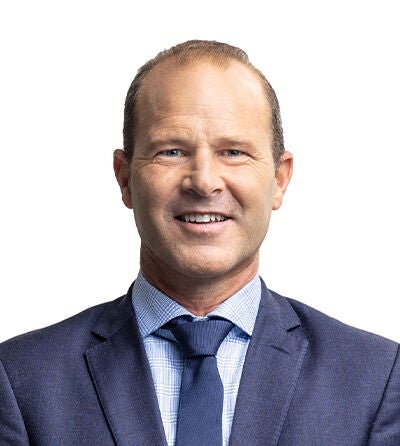
Author - Ryan Johnson
National Director - Commercial & Industrial and Capital Markets
Ryan leads Bayleys’ commercial and industrial real estate business and capital market teams. This brings together New Zealand’s largest commercial agency with 230 brokers transacting 2,770 deals worth in excess of $3.4 billion annually.
Contact us


