


Total Property -
Bedding in student accommodation
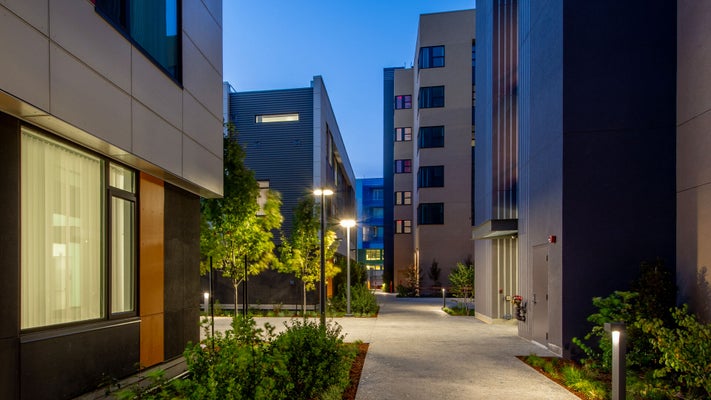
Purpose-built student accommodation is integral to easing residential housing pressures and underpinning the long-term vitality of university cities, with investors increasingly recognising the asset class’s structural strengths.
Investor appetite for the “beds, eds and meds” living sectors continues to build, with purpose-built student accommodation (PBSA) assets gaining momentum as private capital looks to diversify beyond traditional property classes.
Bayleys national director of commercial and industrial and head of its capital markets team, Ryan Johnson, says data from the UK and Australia, provided by Bayleys’ global real estate partner Knight Frank, highlights an undersupply of purpose built student accommodation, with private capital leading new delivery and listed investors becoming increasingly active.
“Knight Frank anticipates a rise in public private partnerships as universities and development entities collaborate to unlock strategically located sites, underpinned by growing investor appetite for university leased assets with long, net lease terms and secure income profiles.
“Joint ventures and capital partnerships are improving development viability, supporting the delivery of new accommodation to meet expanding student populations and buoyed by high occupancy levels.”
The latest UK Student Accommodation Outlook from Knight Frank reports that student housing investment returns remain resilient, outperforming most UK sectors over three, five and 10-year horizons – second only to industrial in the long run.
Its survey showed that the availability of student accommodation is a core consideration for students deciding where to study with practical factors including cost, quality, amenities, safety and pastoral care. It showed 62 percent of students overall said they agree or strongly agree that the quality of their accommodation impacts their academic performance, and 79 percent believed pastoral care should be a standard part of campus-aligned accommodation offerings.
“The survey findings show that students increasingly regard accommodation as a critical enabler of academic performance and wellbeing, rather than simply a place to live,” says Johnson.
In Australia, Knight Frank reports growing support among policymakers and stakeholders for the expansion of PBSA. While the sector continues to be viewed favourably, underpinned by structural undersupply, enrolment growth and counter-cyclical characteristics, investors, developers and operators are increasingly focused on affordability, and the role accommodation plays in students’ study choices.
To address persistent supply constraints, partnerships between universities and private providers to deliver new or refurbished stock are expected to increase, supported by the sector’s strong rental performance.
“Student accommodation is now recognised as core rather than a nice-to-have among tertiary education providers, acting as a vital student attraction and retention tool,” says Johnson.
“Housing students close to campus supports stronger social engagement, reduces transport demand, and helps ease pressure on the wider private rental market.”
The appeal of the PBSA sector has resonated with the listed sector in New Zealand, with Precinct Properties committing to student accommodation projects at 22 Stanley Street, Parnell and at 256 Queen Street, in Auckland’s CBD taking the total number of beds under development to circa-1600 over two sites.
Game-changing
Nuanced funding and development models are emerging for PBSAs in New Zealand, illustrated by the innovative Carlaw Park Student Village in Parnell, Auckland.
Private property development investment and management firm Reidy & Co, its joint venture partner Haydn & Rollett, and capital partner Ergon Properties, developed the first three stages of the comprehensive village, starting in 2014 and progressively building as demand increased.
Reidy & Co managing director Greg Reidy says its proven model has delivered quality student accommodation options for the University of Auckland, which has taken long-term commercial leases and assumed operational management across the Carlaw Park precinct.
“Following the completion of Stuart McCutcheon House in January 2023, our joint venture advanced plans for a further PBSA development at neighbouring 22 Stanley Street.
“Reidy & Co with Haydn & Rollett secured site control, a long-term lease commitment with the University of Auckland, and resource consent for a scheme exceeding height limits by two levels.
“During the conditional phase, Precinct Properties was introduced as developer and owner, replacing the original capital partner and progressing a new strategic partnership with a Singapore-based institutional asset manager.”
The provision of self-catered accommodation supported by collegial shared amenities for new and returning undergraduate (not school leaver) and postgraduate students is proving a highly successful model for universities around the world and Reidy says global trends have guided the evolving blueprint at Carlaw.
“Stuart McCutcheon House and the earlier two stages of the village focused on three-to-six-bedroom apartments which appeal to those students who want a flatting experience with other like-minded students. The apartments have efficient layouts and are backed by common social and utility areas on the ground floor, and communal outside spaces with courtyards.
“The building at 22 Stanley Street will be larger than Stuart McCutcheon House and is designed to complement the existing student accommodation at Carlaw Park Student Village. It will comprise 964 ensuited studio apartments providing independent living, supported by communal amenities including study rooms on each level and other shared spaces at ground level to encourage connection and engagement.
“This model is particularly well suited to international and postgraduate students, as well as older undergraduates, who value private living spaces alongside the social and academic benefits of well-designed shared facilities within the building.
“Construction commenced six months ago, and the project is progressing well, with three levels now complete. Once finished, it is expected to have an end value of approximately $290 million.”

Vibrant spaces
Reidy says universities are taking a more proactive approach to student accommodation, recognising its importance in supporting enrolment growth. He notes that a shortage of affordable rental housing, particularly in city-fringe locations close to campuses, is driving strong demand for high-quality purpose built accommodation.
“These are large-scale developments that require extensive upfront planning, particularly around consenting timeframes and lease negotiations. Typically, the arrangements involve net commercial leases, with universities assuming responsibility for all outgoings.
“Purpose-built development is our preferred approach, as converting existing commercial assets, particularly former office buildings, can be constrained by inefficient or inflexible floor plates.
“Demand for the Carlaw Park buildings has validated this approach, with the accommodation consistently oversubscribed.”
22 Stanley Street strengthens the University of Auckland’s Carlaw Park offering, with a pastoral care component reflects the commitment to student wellbeing demonstrated right across its varied Auckland residential portfolio.
Meanwhile, the University of Waikato is seeing elevated demand for student accommodation for its evolving Tauranga campus. To supplement the university’s current residential housing stock, it plans to convert an existing commercial building at 146 Durham Street into student accommodation, with a completion date of late 2027, and has confirmed a new PBSA development in the CBD.
Reidy & Co, Hayden & Rollett, and Ergon Properties as ownership partner are facilitating the complex at 219 Cameron Road, Tauranga targeted for completion in 2029.
“The building will offer 228 ensuited studios, with communal cooking facilities and other shared spaces. It’s less than one-third the size of the new Stanley Street building, and a long-term lease has been entered into with the university,” explains Reidy.
“It’s a very forward-thinking initiative on the part of University of Waikato, as along with growing their academic offerings, they’re proactively addressing the need for suitable student accommodation.”
Bayleys national director commercial and industrial, Ryan Johnson says the developments demonstrate the growing strategic importance of PBSA in New Zealand’s urban centres.
“There’s clearly strong demand for high-quality student accommodation, and these projects highlight how universities are taking proactive steps to meet that need while creating vibrant, connected communities in their city centres,” he says.
He notes that well-designed PBSA developments not only support student wellbeing but also contribute to wider urban growth. “Developments like Stanley Street and Cameron Road bring social and economic benefits, activating city hubs and reinforcing the role of cities like Auckland and Tauranga as credible, liveable university centres,” Johnson adds.
Asked about future PBSA developments around the country, Reidy says opportunities are assessed on a case by case basis, with robust university lease commitments often central to project viability.
“We’re in dialogue with a number of campuses, and where universities are prepared to enter into leases, the model can work well,” he says.
Reidy notes a global shift away from university ownership of student accommodation, alongside a growing focus on pastoral care outcomes. Under this model, universities typically commit to a lease or operational arrangements, while day to day operations are outsourced to specialist third party providers such as UniLodge, supported by clear duty of care frameworks.

Building a community
Campbell House, a 1920s masonry building with an Art Deco heritage façade, has been reimagined as part of an innovative PBSA hub at the intersection of Lorne and Rutland Streets in Auckland’s CBD, within easy walking distance of the University of Auckland and AUT’s City Campus.
Through a three-way partnership between masterplan developers McConnell Property, unlisted funds management company Cedar Pacific, and Australasia’s largest student accommodation operator UniLodge, the character building anchors an 18-level development delivering 758 student beds.
Known as UniLodge Auckland Central, the recently opened facility sets itself apart in the Auckland market by integrating heritage architecture with contemporary student living.
McConnell Property development manager Aimee Cornish says the result is a high-quality residential environment that also makes a positive contribution to the CBD streetscape.
“Preserving the heritage character while meeting modern performance standards was a challenge and required highly specialised input. Through close collaboration between the development team, the designers and the main contractor, we ensured quality without compromising the project’s commercial viability.
“The restoration works have enhanced the heritage values of Campbell House and secured its long-term future. By retaining the original structure, the project met its ambitious sustainability targets, significantly reducing embodied carbon and achieving a 5-Star Green Star Design and As Built NZ v1.0 rating.”
Cornish says social outcomes were central to the brief, with the building deliberately designed to support independent living, student connection and pastoral care. The approach has proven successful and is a model McConnell Property intends to replicate elsewhere.
“Resident feedback has been consistently strong, particularly around the quality and scale of communal facilities,” she says. “Amenities such as a gym, library, study rooms, music rooms and a theatre have helped foster a genuine sense of community.
“Cedar Pacific has been the developer and owner of nine PBSA properties in New Zealand located in Auckland and Christchurch – all operated by UniLodge. McConnell Property has had a working relationship with Cedar Pacific for more than 20 years, and we see this relationship continuing as the PBSA market grows in New Zealand.
“The relationship also underpins our build-to-rent strategy and our initial joint project on the old Gasometer site in Takapuna.”
UniLodge has more than 130 student accommodation properties under its management throughout Australia and New Zealand. Executive chairman Peter Bates says UniLodge Auckland Central is a standout example of purpose-built student accommodation delivered with clarity of vision and genuine care for the end user saying, “from day one, it has felt like a community, not just a building.”
Contact us


